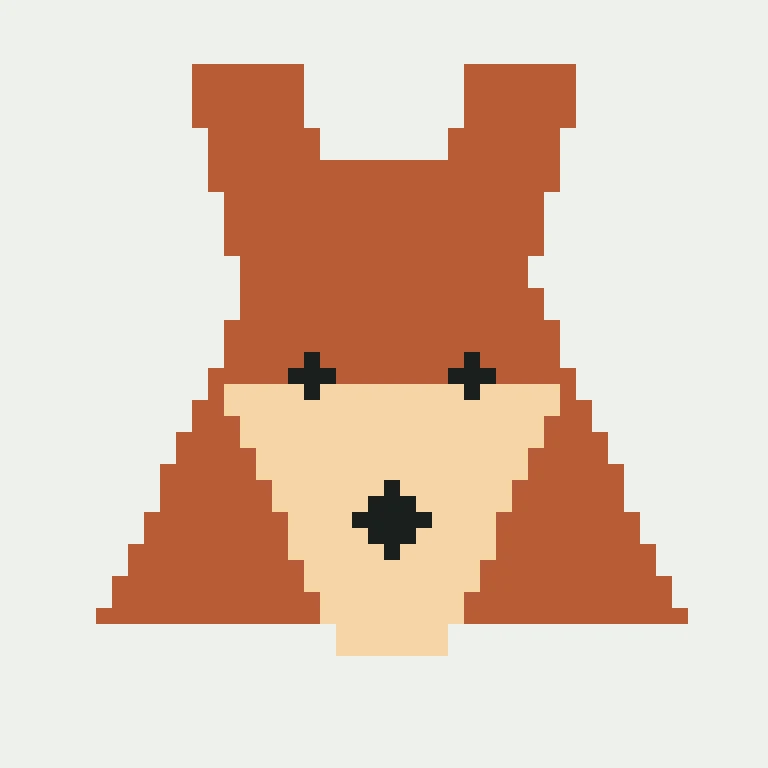
Begin with the eyes and pose
For a pet portrait, choose an image where both eyes are visible and at least one has a clear catchlight. The nose and mouth should not disappear into a dark shadow. Eye-level photos usually feel more personal than pictures taken from far above. A three-quarter angle can show muzzle shape while keeping both sides of the face recognizable.
Wildlife silhouettes can work with less facial detail when antlers, tail, wings, or body posture carry the subject. Crop enough surrounding space to preserve those features, but remove distant branches and ground texture. Motion blur is difficult to translate because the converter must turn soft movement into hard grid edges.
Group fur into markings and value planes
Do not count individual hairs. Look for larger zones: light muzzle, dark ears, forehead stripe, chest patch, and shadow side. Each zone may need two or three shades to suggest form. Too many close browns or grays create confetti without making fur look softer from normal viewing distance.
Keep the darkest shades around pupils, nostrils, mouth separation, and important markings. Preserve a light highlight in the eye when the grid allows it. White fur rarely uses only pure white; warm cream, pale gray, blue-gray, or reflected surroundings may be needed to show shape. Let unstitched white fabric serve as the brightest point when appropriate.
- Prioritize eyes, nose, ears, and signature markings.
- Simplify smooth fur before patterned fur.
- Use strong light-dark separation around the face.
- Remove background colors that appear inside the fur edge by accident.
Give the face enough stitches
A head-and-shoulders pet portrait often needs 80 to 110 stitches across. At 14 count, that creates a stitched width of about 5.7 to 7.9 inches. A simpler side silhouette can work around 50 to 70. Check whether each eye occupies more than one or two squares; tiny eyes are easily lost or shifted by a single miscount.
Increasing width affects the entire chart, so try a tighter crop before creating a very large project. If only the face matters, remove most of the body. If the pet is known for a long tail, unusual ears, or a favorite pose, preserve that identity and accept less facial detail rather than forcing every feature into one crowded chart.
Use a background that supports the outline
A background close to the fur color can erase the silhouette. Increase tonal contrast or mask the background before upload. Muted solid colors work well for memorial portraits because they keep attention on the face and require fewer thread changes than a room, lawn, or blanket.
Watch for color spill at whiskers and ear edges. Very fine whiskers may not survive full-cross conversion at a manageable size. They can be added later as optional backstitch by an experienced stitcher, but the generated chart does not include that line work. Decide whether whiskers are essential before evaluating the automatic preview.
Test the expression before committing
Start the converter around 90 stitches and 20 colors. Switch immediately to the symbol chart and inspect the eyes, nose, and mouth. Lower the palette if fur contains scattered symbols; raise the width if the expression changes because features share too few squares. Compare several drafts side by side using saved PNG files.
Stitch a test containing one eye and nearby fur. This small sample checks whether the darkest shades separate cleanly and whether the highlight remains visible. For a meaningful gift or memorial, ask another person who knows the animal whether the chart reads correctly before starting the full piece.
Plan the next decision
Move from subject-specific advice to the conversion, thread, fabric, or chart-reading step that affects this pattern most.